

Power Pole Perching
Increasing the Risk of coming to harm with ElectricityPerching Behaviour & Power Poles
Birds of Prey in particular like to perch on power poles.
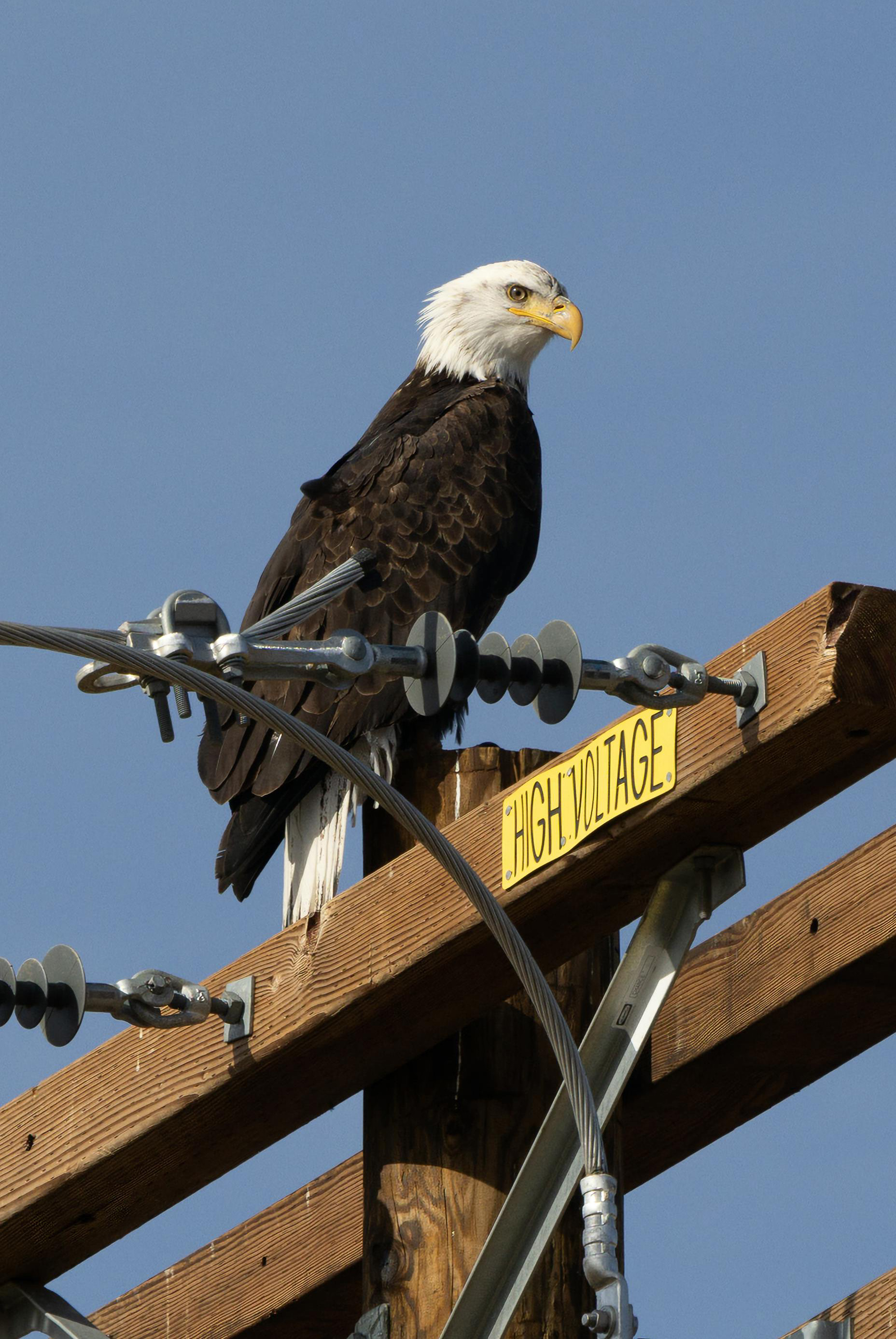
Photo credit to Sean P. Twomey
The power pole, with its height, flat top, wood or metal cross-arm, and other architecture, offers a prominent perch for feeding on, hunting and/or viewing from, a resting place for drying feathers, preening, feeding, digesting, taking time. Where few if any alternatives exist, or simply because of their location, one or more poles can they become a very attractive proposition indeed - so chosen as a preferred perch or simply sought out in a needs-must situation (like for the Osprey Jimmy).
Tragically certain structures and configurations can be deadly, with the probability of a lethal outcome increasing when other risk factors stack up.
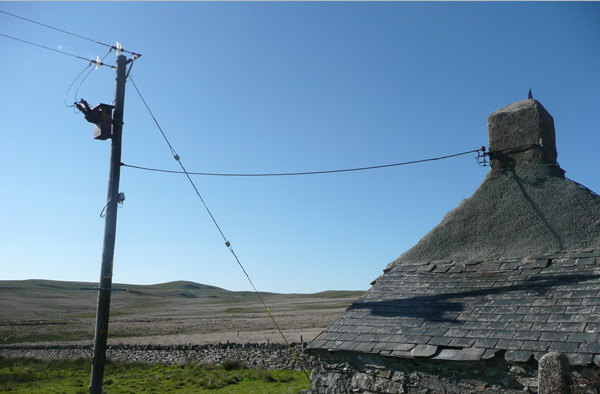
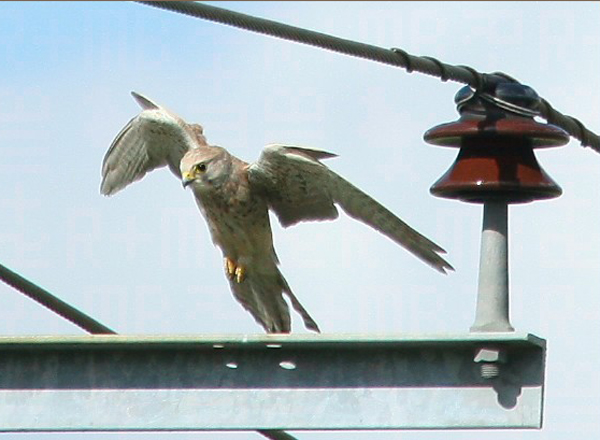
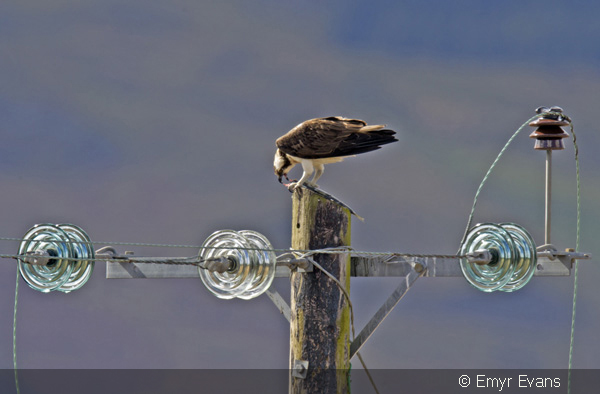
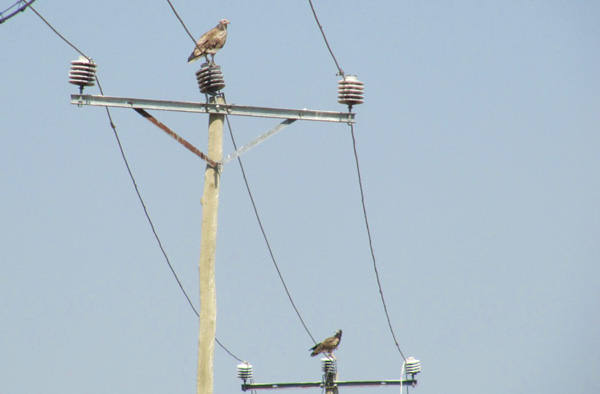
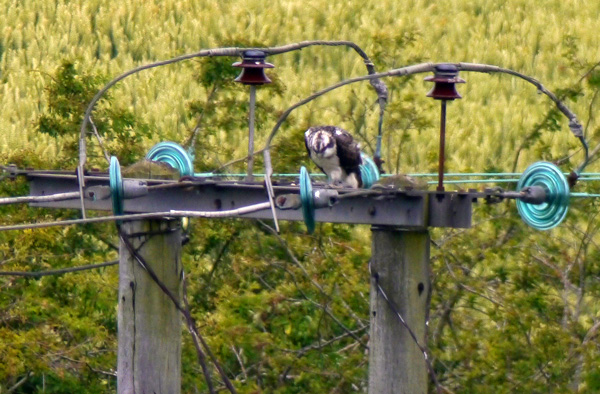
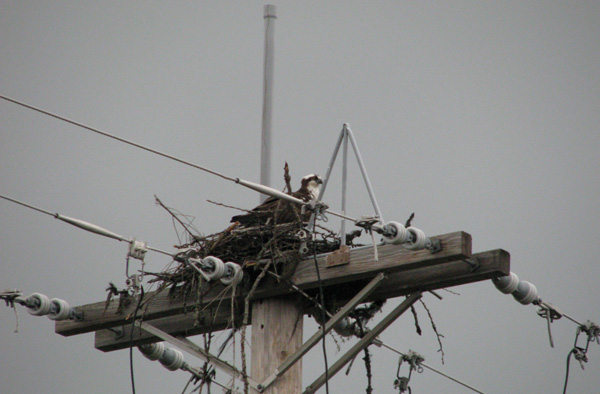
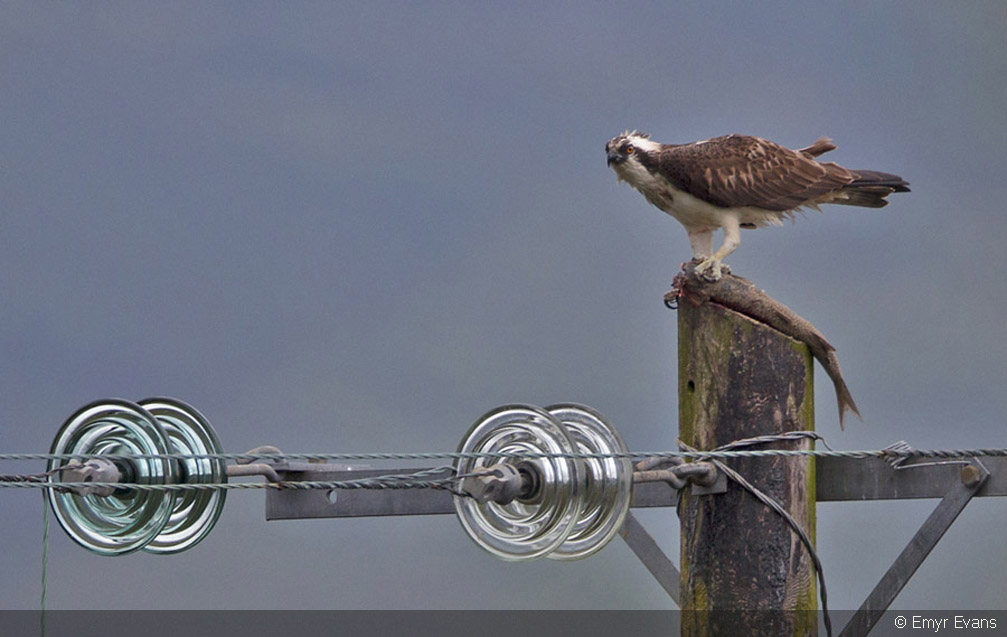
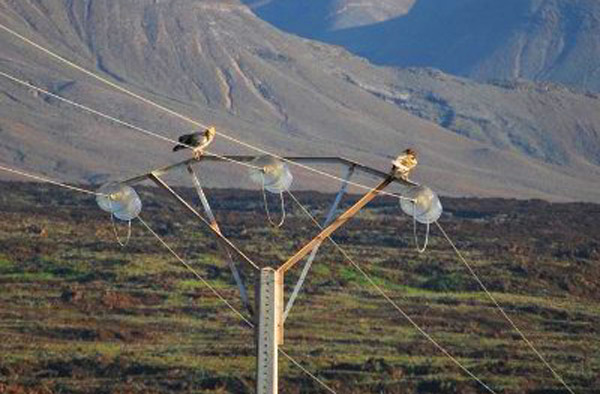
The male Osprey 'Monty' at the Dyfi Osprey Project has a favourite power pole perch to take his fish to. The intruding female Blue 24 did the same.

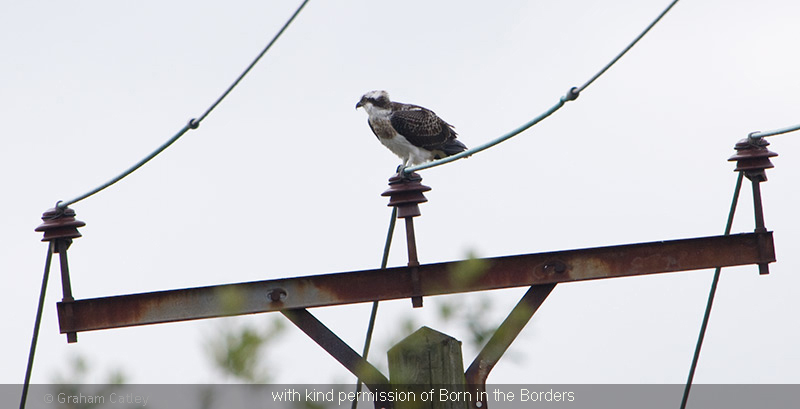
Osprey jeuvenile taking a lookout rest from a Powerpole perch
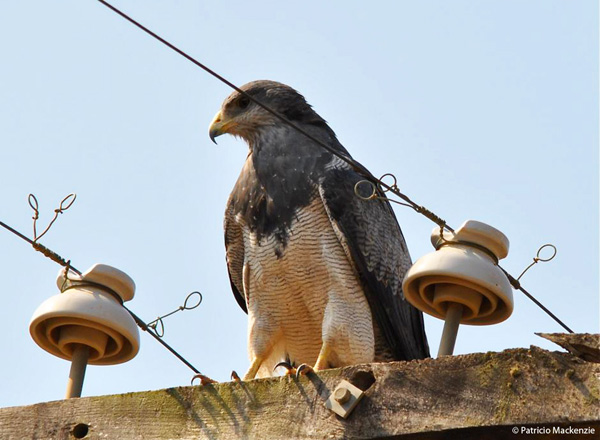
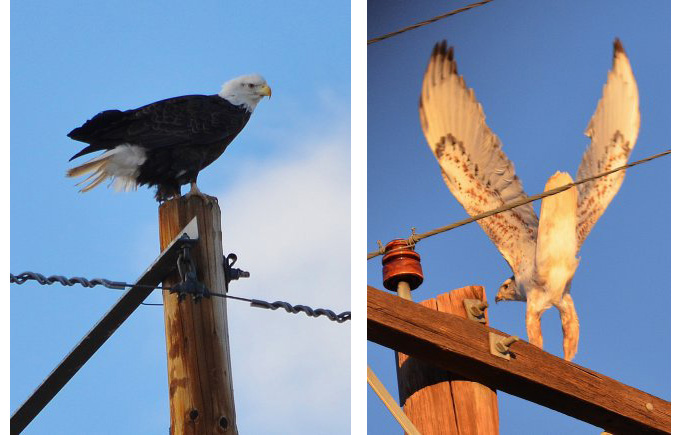
other examples of powerpole perching:
Bald Headed Eagle + Hawk, Port Carson, Colorado
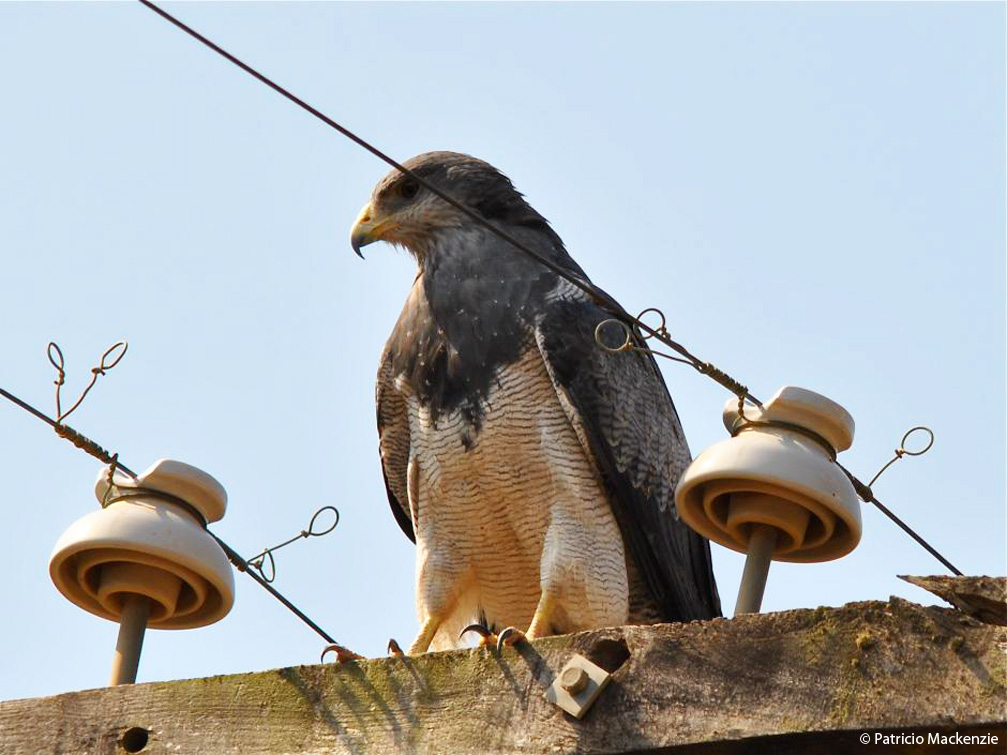
Black-chested Buzzard-eagle on an electricity pole, La Aurora, Chile
with kind permission of photographer
Patricio Mackenzie
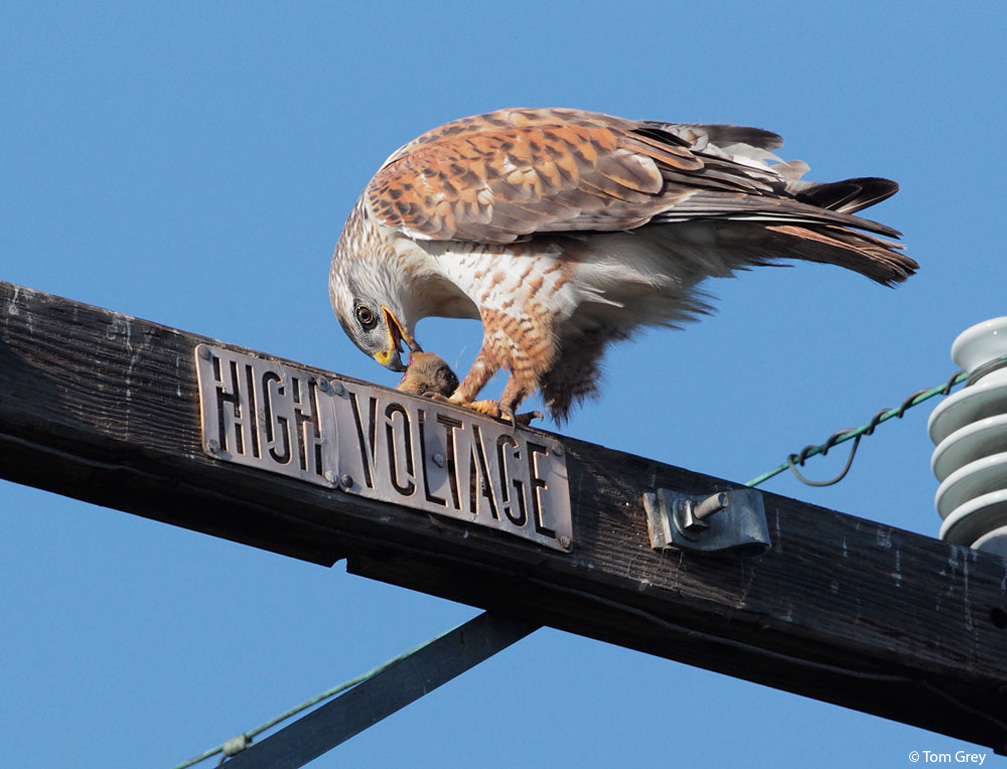
a ferruginous hawk, interior valleys of Coast Range, California
but when things go wrong, that desirable perch becomes a death trap
- as shown in this mock up of the power pole which stole Jimmy's life
