

Osprey Credentials
Find Out| Male | Female | |
|---|---|---|
| Appearance | 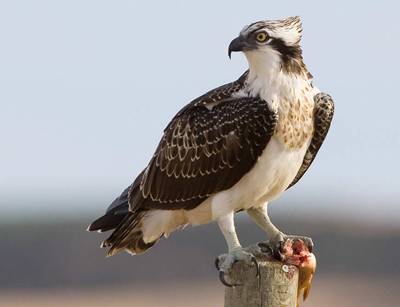
Smaller than female, paler brown upperparts, paler whiter chest. |
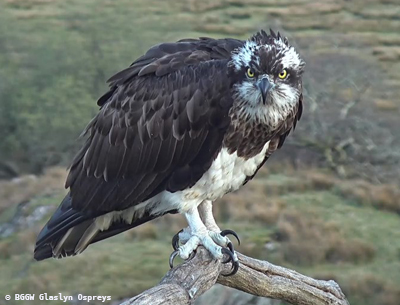
Larger, darker brown upperparts, distinctly marked chest band. |
| Wingspan | 147-166cm | 155-180cm |
| Length | 56-60cm | 57-62 cm |
| Weight | 1.4-1.5kg | 1.6-1.8kg |
| Diet |  |
fish eating caught in fresh or salt water plunge into water from a height enter water feet first with wings swept back grasp fish with sharp talons beat wings strongly to lift out of water UK fish range from sea trout + brown trout, to mullet, roach + flounder plus others too! |
| Nest | 1+ metres in diameter made of sticks, moss, dried grass, bark in locations with views: tree tops, platforms, sometimes on power poles |
|
| Habitat | situate close to water - estuary, lake, river | |
| Life Cycle | Adults first breed aged 3-5 years Return UK to breed late March - April Female lays 2-3 eggs (rarely 4) Hatch 35-42 days Fledge 50-58 days Migrate late August, early September Summer visitor to UK / Europe Migrating to west coast of Africa (a few to Spain + Portugal) |
Reptilian Stage Osprey chicks pass through this when their feathers are in pen quills  |
| Incidence | worldwide except Antarctica (though do not breed in South Amercia + most of Africa) | |
| Prevalance | Estimated worldwide population = 25,000-30,000 Became extinct from UK in 1916, though not thought to have bred in England / Wales since 1840 Scotland now has 300+ breeding pairs, England 30+ pairs, Wales just 7 pairs to-date |
|
| Nickname | 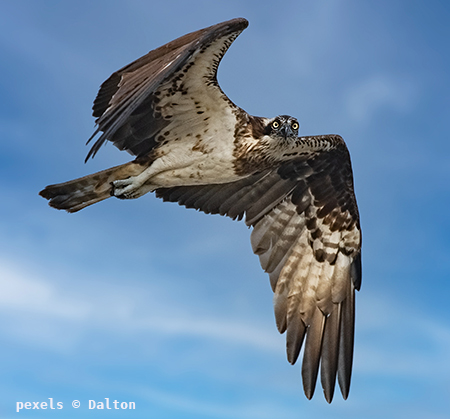 "Fish Eagle", "Sea Hawk", "River Hawk", "Fish Hawk" "Fish Eagle", "Sea Hawk", "River Hawk", "Fish Hawk" |
|
| Why At Risk | Large winged birds Rely on an abundance of fish Dive from a height Perching behaviour Migrate long distances Eggs and young chicks vulnerable Face natural threats and many human hazards |
|